
| Seal type | Description | Temperature | Benefits | Comments |
|---|---|---|---|---|
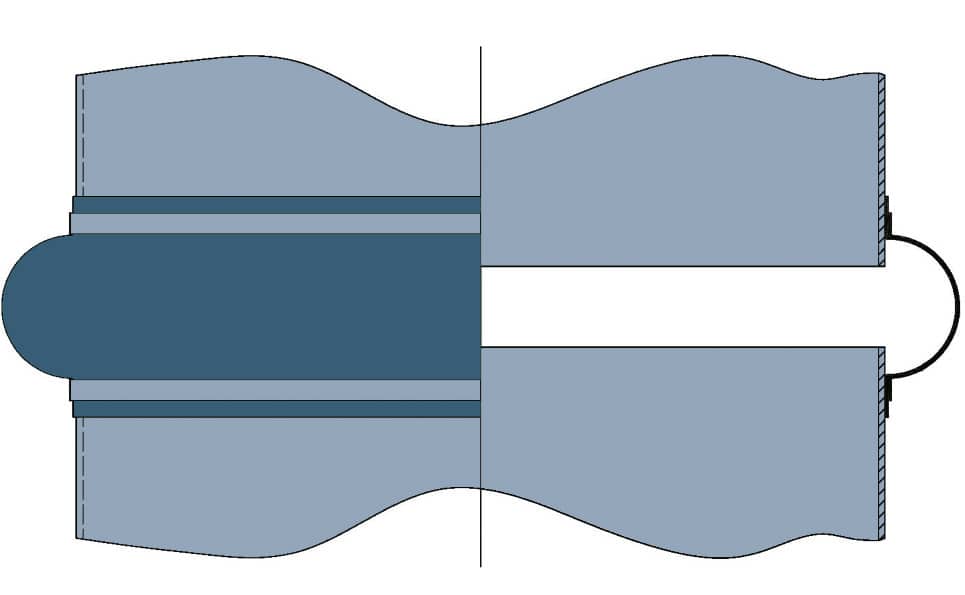
Sealing sleeve
|
Closed sealing cuff. Secured with tensioning straps | Depending on the material selected: -20 to +250 ˚C; up to +400 ˚C in special designs | The simplest and most cost-effective way to seal round inlets and outlets | Materials used include Trellex®, neoprene and silicone |
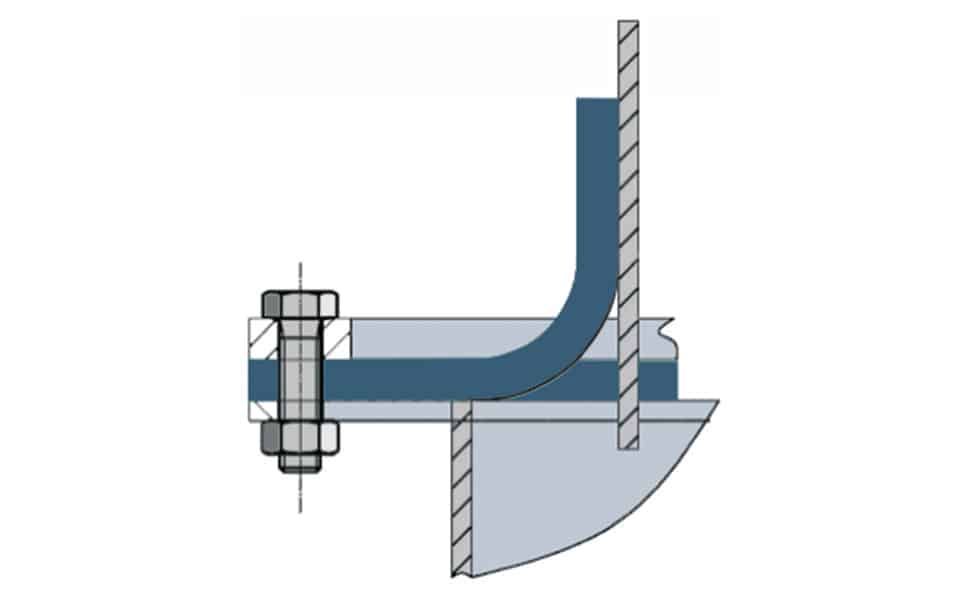
Rubber lip seal
|
Rubber lip screwed onto a steel strip | Depending on the material selected, -20 to +250 ˚C | The simplest and most economical way to seal angular inlets and outlets; only partially dust-tight around the joints | The rubber lip is made of soft rubber |
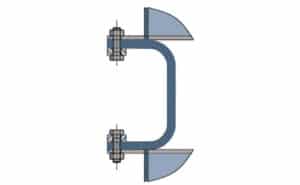
Molded seal
|
Rubber blanket is screwed onto two steel strips | Depending on the material selected, -20 to +250 ˚C | Dust-tight design for sealing square and round inlets and outlets | The most commonly used material for the sealing fabric is Trellex® |
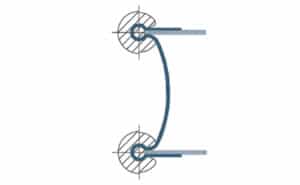
Sealing with clamping profile
|
Sealing fabric is fitted using profile rubber | Depending on the material selected, -20 to +70 ˚C | Dust-tight sealing of square and round inlets and outlets; quick to remove/install | The most commonly used material for the sealing fabric is Trellex® |
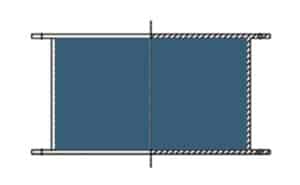
Expansion joint
|
Expansion joint with hole pattern, screwed on with flanges | Depending on the selected compensator material: -70 to +250 ˚C | Absolutely dust-tight seal for square and round inlets and outlets | Pressure-resistant design up to approx. 0.5 bar |
| Type of support | Description | Vibration frequency | Temperature | Benefits | Comments |
|---|---|---|---|---|---|
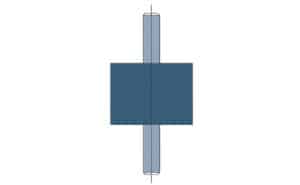
Rubber buffer
|
Support via rubber buffer under compression | 50 to 60 Hz | -20 to +80 °C | Simplest type of support; very stable trough position, even during start-up and shutdown; short spring travel | Trough position precisely fixed |
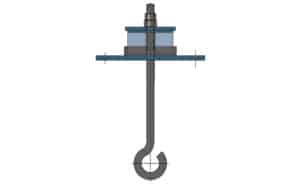
Rubber buffer with suspension
|
Suspension via rubber buffer under compression | 50 to 60 Hz | -20 to +80 °C | Easy to suspend from a hopper or ceiling; channel height adjustable | Chute position not precisely fixed |
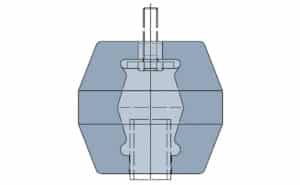
Hollow rubber buffer
|
Support via hollow rubber buffers under pressure | 25 to 40 Hz | -20 to +80 °C | Simplest type of support; very good fixation of the channel position, including during start-up and shutdown | Trough position precisely fixed |
Hollow rubber buffer with suspension
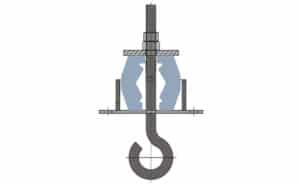
|
Suspension via hollow rubber buffers under compression | 25 to 40 Hz | -20 to +80 °C | Easy to suspend from a hopper or ceiling; channel height adjustable | Chute position not precisely fixed |
Extension springs
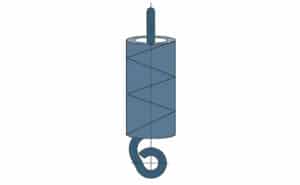
|
Spring suspension via a tensioned coil spring | 12.5 to 60 Hz | -40 to +200 °C; up to +300 °C in special designs | Soft suspension; good vibration isolation; also suitable for bulk materials at higher temperatures | Chute position not precisely fixed |
Compression springs
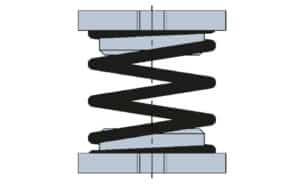
|
Support via coil spring under compression | 12.5 to 60 Hz | -40 to +200 °C; up to +300 °C in special designs | Soft suspension; good vibration isolation; also suitable for bulk materials at higher temperatures | Channel position precisely fixed; high load capacity |
Compression spring
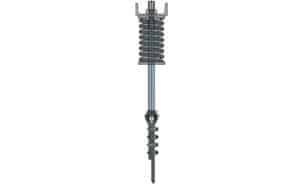
|
Suspension via compression spring | 12.5 to 50 Hz | -40 to +200 °C; up to +300 °C in special designs | Easy to suspend from a hopper or ceiling; channel height adjustable | Trough position not fixed precisely; high load capacity |
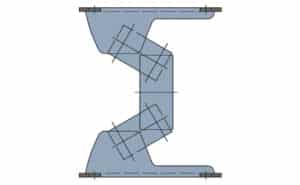
Rubber hinge spring
|
Support via oscillating element | 12.5 to 25 Hz | -40 to +80 °C | High inherent damping, no swaying as with coil springs. No torsional movement in the direction of conveyance; large amplitudes possible. | Trough position precisely fixed |
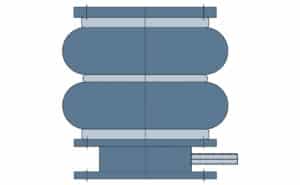
Pneumatic elements
|
Support via air spring element | 12.5 to 60 Hz | -20 to +80 °C | Precise height adjustment by changing the air pressure. Effective noise reduction, large pivot ranges possible, very good vibration isolation | Channel position precisely fixed; requires low air pressure |